

Branded merchandise can help charities and not-for-profit organisations raise awareness, reward volunteers, and give donors something tangible to take away. This guide covers what to order, how to keep costs manageable, and what to look for when buying on behalf of a charity or fundraising team.
Why branded merchandise matters at charity events
When someone wears a branded t-shirt or carries a tote bag from your event, your cause travels with them. That kind of visibility is hard to buy through advertising alone. Merchandise also gives volunteers a sense of belonging and makes your team easy to identify on the day. There's a practical side too. Branded items can be sold as part of the fundraising itself, used as incentives for donors who hit a giving threshold, or handed out to raise awareness in the weeks before the event. A well-chosen product does more than one job.
Budgeting when funds are limited
Most charities are working with tighter budgets than commercial buyers, and that's fine to say out loud. The goal is to spend what you have in a way that gets the most visibility per pound. A few principles that help: Order the right quantity Ordering more units usually reduces the cost per item, but only order what you'll actually use. Leftover stock is wasted budget. Choose items with a long shelf life A tote bag or a pen gets used long after the event. A product that's thrown away the same day gives you nothing. Prioritise visibility Items people wear or carry in public (bags, t-shirts, lanyards) keep working after the event ends. Ask about lower-minimum options If you're running a small event, check whether a similar product is available with a lower minimum order quantity before committing. If budget is genuinely tight, it's worth being direct about it when you place your order. We can tell you which products give the best return at lower quantities.
Products that work well for charity events
There's no single product that suits every fundraiser, but some categories consistently perform well for charities.
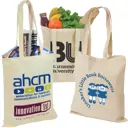
- Tote bags are popular because they're reusable, visible and practical. They work as giveaways, goodie bag inserts, or items to sell on the day.
- Lanyards are useful at any event where volunteers or staff need to be identifiable. They're low-cost and quick to produce.
- T-shirts and vests give your team a consistent look and double as walking advertising. They're also items people genuinely keep and wear again. 4.Wristbands are a staple of fundraising events. They're inexpensive, easy to distribute, and clearly associated with charity campaigns.
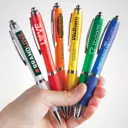
- Pens and notebooks work well as thank-you gifts for donors or as practical items at registration desks.
- Branded balloons and bunting add atmosphere to outdoor events and reinforce your colour scheme without a large spend. For events with a strong community focus, our Exhibition and Giveaways category has a broad range of items suited to public-facing occasions.
Ethical sourcing and why it matters for charities
For a charity, the products you put your name on reflect your values. If your organisation works on environmental or social causes, it matters that your merchandise is produced responsibly. When you order, it's worth asking:
- Where is the product made? Reputable suppliers should be able to tell you.
- Are there certified sustainable options? Products made from organic cotton, recycled materials or responsibly sourced alternatives are increasingly available at competitive prices. 3.Is the supplier transparent about their supply chain? If they can't answer basic questions, that's worth noting. Our Eco Products range includes items made from recycled and sustainably sourced materials. These are a practical option if your charity wants merchandise that reflects its environmental commitments.
Ordering tips for charity and fundraising teams
A few things that make the process smoother, particularly if you haven't ordered branded merchandise before. Get your artwork ready early. You'll need a good-quality version of your logo, ideally as a vector file (a .ai, .eps or .pdf). If you only have a low-resolution image, tell us and we'll advise on what's workable. Confirm your deadline before you order. If you have a fixed event date, tell us at the start. We'll tell you straight away whether the timeline is achievable. Use the proof stage properly We send a digital visual proof within 20 minutes of receiving your artwork. Check the spelling, the colours and the logo placement carefully before you approve it. Changes after approval can delay production. Factor in delivery time. Production and delivery are separate stages. Ask for the expected delivery date when you confirm your order. Order a small buffer. If you need 200 items for an event, ordering slightly more protects you against last-minute additions to the guest list.
Volunteer and donor audiences: what to think about
The people receiving your merchandise are different from a typical corporate audience. Volunteers give their time because they believe in the cause. Donors give money for the same reason. The products you choose should feel considered, not wasteful. That means avoiding items that are likely to be discarded immediately. It also means thinking about whether the product is genuinely useful to the person receiving it. A cheap item that gets thrown away reflects poorly on the organisation. A practical item that gets used for months keeps your cause visible long after the event. If you're buying for a mixed audience (some volunteers, some donors, some members of the public), it's worth thinking about whether one product suits all three groups or whether you need two or three different items at different price points.
Frequently asked questions
Can charities order branded merchandise at a lower minimum quantity than commercial buyers?
Minimum order quantities vary by product, not by the type of organisation placing the order. That said, some products have lower minimums than others, so if your required quantity is small, it's worth asking us which options are available at that level. We'll always try to find something that works within your constraints.
Do you offer any discounts for charities or not-for-profit organisations?
We don't have a standard charity discount scheme, but we can talk through what your budget will realistically get you and make sure you're ordering the most cost-effective products for your event. Being upfront about your budget at the start of the conversation helps us point you in the right direction.
How quickly can you turn around an order for a fundraising event?
Turnaround times depend on the product and the quantity. The best approach is to tell us your event date when you get in touch, and we'll confirm whether the timeline is achievable before you commit to anything. We send a digital proof within 20 minutes of receiving your artwork, which keeps the approval stage moving quickly.
What file format do I need to provide my charity's logo?
A vector file works best: .ai, .eps or a high-resolution .pdf. These scale without losing quality, which matters when your logo is being printed or embroidered at different sizes. If you only have a .jpg or .png, send it anyway and we'll tell you whether it's usable or whether we need something different.